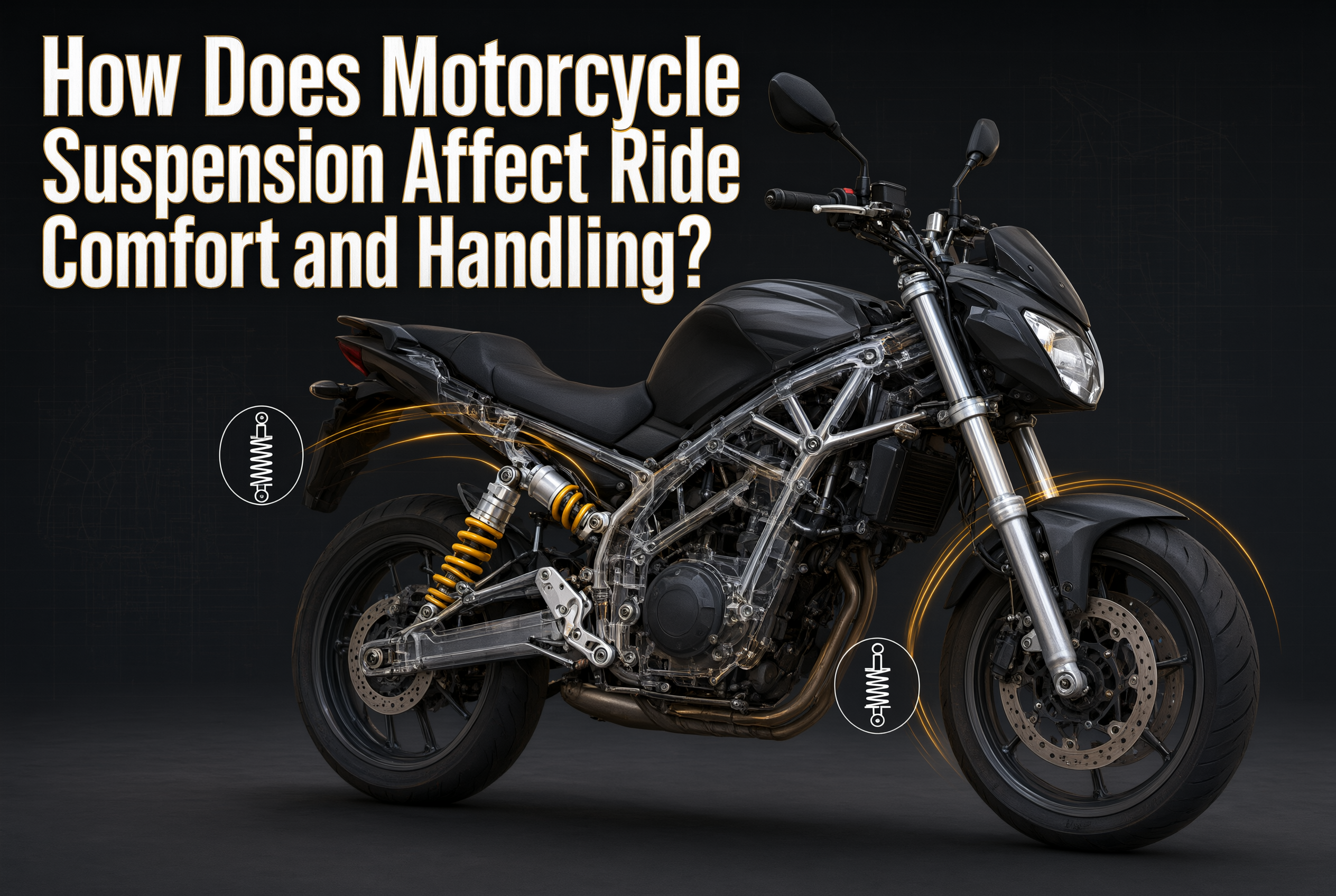
Your bike’s suspension does more work than most riders realize. It absorbs bumps, keeps your tires gripping the road, and decides how confident you feel in a turn.
Modern riders now have access to smart motorcycle suspension systems with sensors and a wide range of custom suspension parts that can transform an average ride into a smooth, controlled one.
This guide breaks down how suspension works, why it matters, and how to choose upgrades that fit your riding style.
What Suspension Actually Does
Suspension connects your wheels to the bike frame. It manages every bump, dip, and crack in the road so your tires stay in contact with the ground.
Without good suspension, even a smooth highway can feel rough. With it, rough trails feel manageable.
The Two Main Jobs
- Comfort: Absorbing shocks from bumps, potholes, and uneven surfaces
- Handling: Keeping tires gripping the road during turns, braking, and acceleration
How Suspension Affects Ride Comfort
Comfort comes down to how well your suspension soaks up bumps before they reach your body. Stiff or worn-out suspension sends every jolt straight to your spine.
- Soft suspension absorbs small bumps well but can feel bouncy at speed
- Stiff suspension handles big impacts better but feels harsh on rough roads
- Worn fork seals or shocks lose their ability to cushion impacts over time
- Proper sag settings make a noticeable difference on long rides
Signs Your Suspension Needs Attention
- Bike feels harsh even on smooth roads
- Front end dives heavily under braking
- Rear end bounces after hitting a bump
- Visible oil leaking from fork seals
How Suspension Affects Handling
Handling is about control. Good suspension keeps your tires planted, which means better grip when leaning into corners or braking hard.
Poor suspension causes the bike to wobble, lose traction, or feel unstable at higher speeds, especially on uneven pavement.
| Suspension Setup | Comfort Level | Handling Performance |
| Soft / Stock Setup | High | Moderate |
| Stiff / Sport Setup | Moderate | High |
| Adjustable Custom Setup | High | High |
| Worn / Old Setup | Low | Low |
Why Smart Motorcycle Suspension Systems With Sensors Are Gaining Ground
Technology has changed how suspension works. Smart motorcycle suspension systems with sensors can read road conditions in real time and adjust damping automatically.
This means the bike can stiffen up for a hard corner, then soften again for a bumpy straightaway, all without the rider touching a dial.
Key Benefits of Sensor-Based Systems
- Automatic adjustment based on speed, braking, and road surface
- Improved stability during sudden lane changes or hard stops
- Less guesswork for riders who are not suspension experts
- Smoother transitions between comfort and sport-level stiffness
Who Should Consider It
Riders who cover long distances, switch between city and highway often, or carry passengers and cargo tend to benefit most from sensor-based suspension upgrades.
Choosing the Right Custom Suspension Parts
Not every rider needs a full electronic system. Many riders get great results from custom suspension parts matched to their weight, riding style, and terrain.
Popular Upgrade Options
- Adjustable rear shocks: Let riders set preload and damping for their weight and load
- Upgraded fork springs: Match spring rate to rider weight for better front-end feel
- Steering dampers: Reduce wobble at high speeds or on rough roads
- Linkage kits: Change how the rear suspension responds to bumps
- Fork cartridge kits: Improve damping control on older or budget forks
Matching Parts to Riding Style
Touring riders in states like Florida or Ohio often want softer, comfort-focused setups for long highway miles. Sport riders in California canyon roads usually prefer stiffer, more responsive setups.
Off-road and adventure riders in places like Colorado or Montana need taller travel and stronger damping to handle rocky, uneven trails.
Suspension Maintenance Tips
Even the best parts wear out without care. Keep your suspension performing well with a few simple habits.
- Check fork seals for leaks every few months
- Clean stanchions after muddy or wet rides
- Set sag correctly when you change riding weight or gear load
- Replace fork oil every 12,000 to 15,000 miles
- Inspect shock mounts and bushings for wear yearly
Where to Find Quality Suspension Parts
Finding the right custom suspension parts or a smart motorcycle suspension system with sensors starts with knowing your bike’s make, model, and intended use.
- Match parts to your exact bike model and year
- Check rider weight recommendations on spring and shock listings
- Read reviews from riders with similar bikes or terrain
- Compare adjustable versus fixed setups based on your budget
Conclusion
Suspension shapes nearly every part of how a motorcycle feels on the road. Comfort and handling both depend on getting the setup right for your bike and riding style.
Whether you are exploring smart motorcycle suspension systems with sensors or simply need reliable custom suspension parts, choosing components built for your riding needs makes every mile smoother and safer.
Latest News
The Ultimate ATV Maintenance Guide: Keep Your Ride Running Smooth
Read More
How to Choose the Best ATV Tires for Mud, Sand, Rocks & Trails
Read More